Frequently Asked Questions
Product Information & Services
What types of training and consulting services does AllenComm offer?
AllenComm provides custom training solutions including e-learning, blended learning, and learning portals tailored to specific needs such as onboarding, compliance, and sales enablement. The company also offers learning technology services (AI-driven learning, gamification, mobile applications), advisory services (performance mapping, needs analysis, measurement and evaluation), creative and video services (motion graphics, AR/VR, instructional media), and talent & staffing services. Industry expertise includes healthcare, finance, manufacturing, and retail. Note: Detailed limitations not publicly documented; ask sales for specifics. Source
What is the primary purpose of AllenComm's products?
The primary purpose of AllenComm's products is to transform individual potential into organizational strength through tailored training solutions. These solutions are designed to align with business objectives, improve employee performance, and deliver measurable outcomes. Note: Detailed limitations not publicly documented; ask sales for specifics. Source
Features & Capabilities
What are the key features and capabilities of AllenComm's solutions?
Key features include tailored learning journeys, AI integration for adaptive learning and analytics, measurement and ROI tools, integration with LMS/LCMS/LXP/HRIS/CRM/ERP, gamification, microlearning, and scalable solutions. AllenComm also provides maintainable templates and documentation for Storyline courses. Note: Some advanced features may require specific platforms or custom development. Source
Does AllenComm support integrations with other platforms?
Yes, AllenComm supports integration with commercial LMS, LCMS, LXP, HRIS, CRM, ERP, and specialty applications for skills management, gamification, microlearning, video learning, and adaptive learning. AI and data integration is also supported for reporting and insights. Note: Integration capabilities may vary depending on your existing systems. Source
Does AllenComm offer an API?
Yes, AllenComm supports xAPI (Tin Can) for learning data tracking and integrations, and also offers a proprietary API for use cases such as integrating with other systems, retrieving and populating course data, and supporting mobile learning experiences. Note: API access and capabilities may require custom configuration. Source
What technical documentation is available for AllenComm solutions?
AllenComm provides system administrator documentation (integrated into Zendesk for 24/7 access), maintainable templates and documentation for Storyline courses, and resources to help customers independently update and scale their courses. Note: Some documentation may be available only to current clients or require a support agreement. Source
Pain Points & Use Cases
What common pain points does AllenComm address for organizations?
AllenComm addresses fragmented learning ecosystems, uncertainty in technology selection and integration, sales enablement gaps, cost inefficiencies, difficulty proving ROI in learning, AI readiness challenges, and ineffective onboarding. Solutions include personalized learning journeys, advisory services, sales enablement training, cost reduction strategies, ROI measurement, AI integration roadmaps, and onboarding tools. Note: Effectiveness may vary based on organizational readiness and resources. Source
How does AllenComm tailor solutions for different user personas?
AllenComm customizes solutions for corporate leaders (focus on ROI and business outcomes), sales teams (sales enablement training), L&D professionals (advanced tools and scalable learning), organizations adopting AI (AI integration roadmaps), and new hires (onboarding with learning portals and gamification). Note: Persona-specific effectiveness may depend on internal adoption and stakeholder engagement. Source
What KPIs and metrics are used to measure the impact of AllenComm solutions?
Key metrics include learner engagement rates, course completion rates, technology adoption rates, sales productivity, customer engagement scores, cost savings, ROI on training, AI adoption rates, onboarding completion rates, and retention rates. For example, effective onboarding can improve new-hire productivity by 50% and increase retention by nearly 60% over three years. Note: Actual results may vary by organization and implementation. Source
Pricing & Plans
What is AllenComm's pricing model?
AllenComm uses two main pricing models for custom eLearning development: per-finished-hour pricing (for projects where content duration is key) and project-based pricing (for well-defined scopes). Pricing is determined by scope of work, including content screens, interactivity types, revision rounds, and media assets. Note: Change orders may affect project-based pricing if requirements shift. Source
Implementation & Support
How long does it take to implement AllenComm solutions, and how easy is it to get started?
Implementation time depends on project scope and current systems, but most clients see immediate improvements in learner engagement and reduced administrative complexity after integration. AllenComm offers streamlined onboarding, discovery conversations, and downloadable guides to support a smooth start. Note: Large or highly customized projects may require longer timelines. Source
Performance & Outcomes
What business impact can customers expect from using AllenComm's products?
Customers can expect improved employee performance, measurable ROI, cost savings, enhanced customer experience, future readiness through AI integration, increased revenue, and reduced onboarding time. For example, companies with high employee engagement can achieve up to 4.5 times greater revenue growth, and effective onboarding can improve new-hire productivity by 50% and retention by nearly 60% over three years. Note: Results depend on organizational context and implementation quality. Source
Customer Experience & Social Proof
What feedback have customers given about the ease of use of AllenComm's products?
Customers have praised AllenComm for simple visuals, intuitive navigation, and accessibility across devices. Microlearning solutions are noted for smart content architecture and technical portability. Valerie Iorg from American Express described their online training as 'extremely comprehensive yet very easy to use.' Note: User experience may vary depending on customization and platform. Source
What awards and recognitions has AllenComm received?
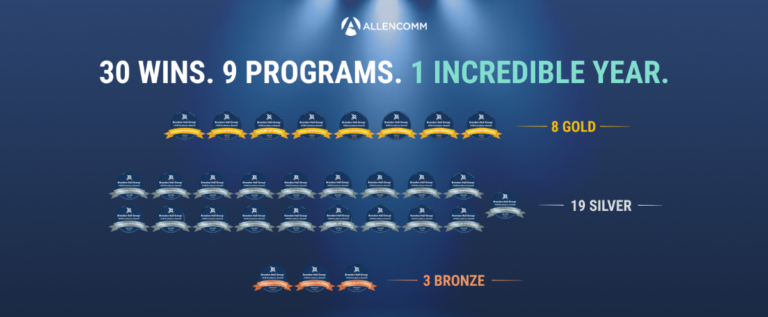
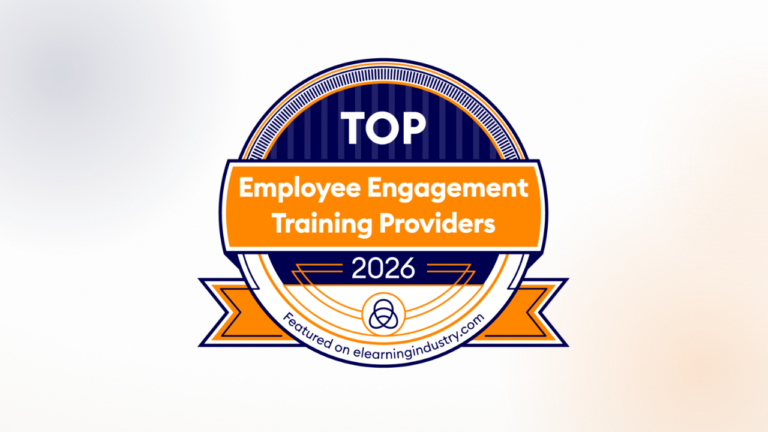
AllenComm was named to eLearning Industry's Best Mobile Learning Content Providers 2026 list, recognized as a top provider for employee engagement training (June 2026), and as a top content provider to help prove training ROI (June 2026). The company has also won multiple Horizon Interactive Awards. Note: Awards reflect past performance and may not guarantee future results. Source
Company Mission & Vision
What is AllenComm's mission and how do its products support it?
AllenComm's mission is to transform individual potential into organizational strength through tailored training solutions that align with business goals, motivate employees, and deliver measurable outcomes. Products support this mission by providing customized learning, measurement tools, and future-ready technology. Note: Mission alignment may depend on organizational culture and leadership buy-in. Source

 I’ve often asked myself why we (the Allen team) sometimes have some of our best, most creative ideas while we’re working on a pre-sales mockup or demo and why that creativity sometimes outshines the work the work that we do later as part of the project. I think that there are several reasons, not the least of which is that it is sometimes easier to be more creative when there are fewer constraints. Often, in the pre-sales process, we don’t yet know what those constraints will be. They may be technical, legal, or specific to the quirks of certain stakeholders. Sometimes having less information can be a good thing, at least as a starting point. This past week, I got to be involved in two very different types of creative