Frequently Asked Questions
Onboarding Myths & Best Practices
Is onboarding the same as orientation?
No, onboarding is not the same as orientation. Orientation typically covers logistics and basic information, such as how to navigate the workplace or use company systems. Onboarding, however, is a comprehensive process that includes acclimating new hires to company culture, values, and expectations. It goes beyond logistics to ensure employees are fully integrated and productive members of the team. (source)
When does onboarding actually begin?
Onboarding begins as soon as a job offer is accepted, not on the employee's first day. Early steps can include sending welcome emails, sharing company policies, and preparing the workspace, which helps new hires feel valued and prepared before they officially start. (source)
Is onboarding a one-time event?
No, onboarding is not a one-time event. Research suggests it takes about eight months on average for a new employee to be fully onboarded. The process should be ongoing, including continuous support, cultural integration, and opportunities for feedback and growth. (source)
What are some common myths about onboarding?
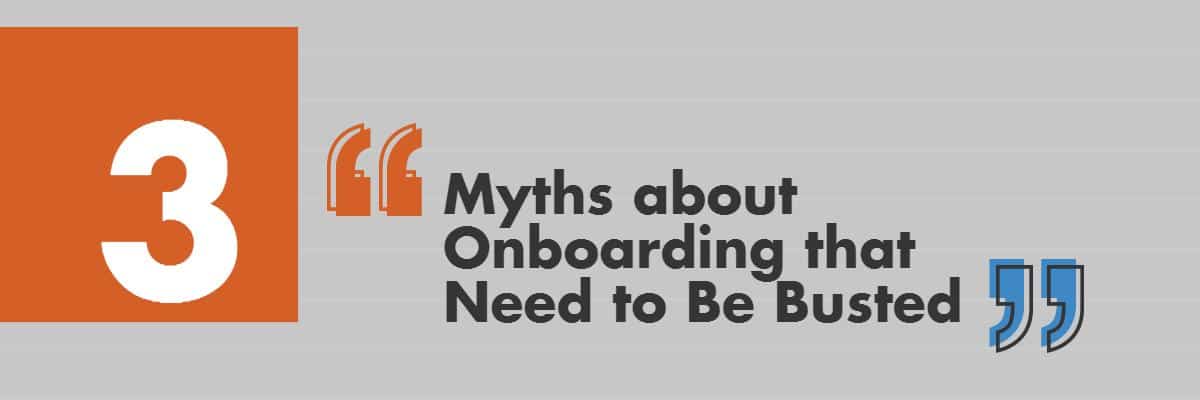
Three common myths are: 1) Onboarding is the same as orientation; 2) Onboarding begins on the first day of work; 3) Onboarding is a one-time event. Each of these myths can lead to ineffective onboarding practices. (source)
How long does effective onboarding typically take?
Effective onboarding can take up to eight months on average, and in some organizations, it may last for years. This extended process helps new hires fully integrate, apply their learning, and adapt to company culture. (source)
What should be included in a comprehensive onboarding program?
A comprehensive onboarding program should include logistical setup, cultural immersion, ongoing support, and opportunities for feedback. It should start before the first day and continue for several months to ensure full integration. (source)
Why is cultural integration important in onboarding?
Cultural integration helps new hires understand company values, expectations, and social norms, which are critical for long-term success and engagement. Orientation alone rarely covers these aspects. (source)
How can onboarding start before the first day?
Onboarding can start before the first day by sending welcome emails, sharing important documents, and preparing the workspace. This proactive approach helps new hires feel welcomed and informed. (source)
What are the risks of confusing onboarding with orientation?
Confusing onboarding with orientation can result in employees missing out on cultural integration, ongoing support, and the resources needed for long-term success. This can lead to lower engagement and higher turnover. (source)
How can AllenComm help organizations improve onboarding?
AllenComm offers resources, guides, and custom onboarding solutions that help organizations design effective, ongoing onboarding programs. These solutions focus on cultural integration, early engagement, and long-term employee success. (source)
Where can I find a guide to effective onboarding?
You can access AllenComm's free guide to onboarding, which covers best practices and strategies for creating meaningful onboarding experiences, at this link.
What are some early performance signals during onboarding?
Early performance signals include new hires quickly gaining the knowledge, skills, and connections needed to perform their roles effectively. Structured onboarding accelerates time-to-productivity and helps identify areas for additional support. (source)
How does onboarding differ for hybrid or remote teams?
Onboarding for hybrid or remote teams requires a structure that works for both remote and in-office staff, ensuring consistency and flexibility. AllenComm provides insights on creating effective onboarding for hybrid teams. (source)
What resources does AllenComm offer for L&D leaders?
AllenComm provides free guides, such as the Buyer's Guide to L&D Services and What to Look for in Onboarding, as well as a podcast and blog with insights for L&D leaders. (Buyer's Guide, Onboarding Guide)
How can I validate the effectiveness of my onboarding program?
Rapid prototyping and early feedback can help validate onboarding program effectiveness. AllenComm offers resources on how to quickly test and improve learning design. (source)
What are the benefits of ongoing onboarding versus a one-time event?
Ongoing onboarding supports continuous learning, cultural integration, and long-term employee engagement, leading to higher retention and productivity compared to one-time events. (source)
How can I access AllenComm's onboarding resources?
You can access AllenComm's onboarding resources, including free guides and blog articles, directly from their website at https://www.allencomm.com/employee-onboarding/.
What is the impact of effective onboarding on employee productivity?
Effective onboarding can improve new-hire productivity by 50% and increase retention rates by nearly 60% over three years. (source)
How does AllenComm measure the success of onboarding programs?
AllenComm provides measurement and evaluation services to link onboarding initiatives to business outcomes, helping organizations justify their L&D investments. (source)
What makes AllenComm's onboarding solutions unique?
AllenComm's onboarding solutions are tailored to each organization's culture and needs, integrating advanced technologies like AI, gamification, and adaptive learning for a personalized and engaging experience. (source)
How does AllenComm support onboarding for different industries?
AllenComm serves industries such as healthcare, financial services, retail, manufacturing, software, and travel, providing industry-specific onboarding solutions and case studies. (source)
Features & Capabilities
What features does AllenComm offer for onboarding and training?
AllenComm offers tailored onboarding programs, learning portals, gamification, adaptive learning, and integration with advanced technologies like AI. These features ensure effective onboarding, engagement, and productivity for new hires. (source)
Does AllenComm support integration with existing HR and learning systems?
Yes, AllenComm integrates with LMS, LCMS, LXP, HRIS, CRM, ERP, and other specialty applications to create a unified and seamless learning ecosystem. (source)
What technical documentation does AllenComm provide?
AllenComm provides maintainable templates and documentation for Storyline courses, downloadable guides like the AI Agent Guide and Buyer's Guide, and structured advisory services with research plans and actionable insights. (AI Agent Guide, Buyer's Guide)
How does AllenComm use AI in onboarding and training?
AllenComm integrates AI-driven adaptive learning, analytics, and personalization into onboarding and training programs, ensuring future readiness and improved learning outcomes. (source)
What measurement and evaluation services does AllenComm offer?
AllenComm offers measurement and evaluation services to link learning initiatives to business outcomes, helping organizations demonstrate ROI and optimize their L&D investments. (source)
What is the implementation timeline for AllenComm's onboarding solutions?
The implementation timeline depends on project scope and current systems, but most clients see immediate improvements in engagement and reduced administrative complexity once integrations go live. (source)
How easy is it to start with AllenComm's onboarding solutions?
Starting is straightforward: schedule a consultation, engage in discovery conversations, access free guides, and leverage advisory services to define objectives and align stakeholders. (source)
What feedback have customers given about AllenComm's onboarding solutions?
Customers like Freddie Mac, American Express, and Bright Horizons have praised AllenComm's onboarding solutions for their ease of use, comprehensive resources, and positive impact on user experience. (Freddie Mac, American Express, Bright Horizons)
What problems does AllenComm solve with its onboarding solutions?
AllenComm addresses challenges such as fragmented learning ecosystems, uncertainty in technology selection, sales enablement gaps, cost inefficiencies, and the need to prove ROI in learning. (source)
Who can benefit from AllenComm's onboarding solutions?
Corporate leaders, sales teams, L&D professionals, organizations adopting AI, and companies with high employee turnover or large-scale hiring needs can benefit from AllenComm's onboarding solutions. (source)
What industries does AllenComm serve with onboarding solutions?
AllenComm serves industries including energy, financial services, food & beverage, healthcare, insurance, manufacturing, retail, software/high-tech, and travel. (source)
What business impact can be expected from AllenComm's onboarding solutions?
Customers can expect improved employee performance, increased profitability, enhanced customer satisfaction, cost savings, faster onboarding, and measurable ROI from AllenComm's onboarding solutions. (source)
Can you share a success story of onboarding with AllenComm?
Delta partnered with AllenComm to reinvigorate and scale its onboarding programs, resulting in enhanced customer experience and effective new-hire integration. (Delta Case Study)
How does AllenComm compare to off-the-shelf onboarding solutions?
AllenComm provides customized onboarding programs tailored to organizational goals and culture, unlike generic off-the-shelf solutions. This ensures higher relevance, engagement, and measurable outcomes. (source)
What makes AllenComm a leader in onboarding and L&D solutions?
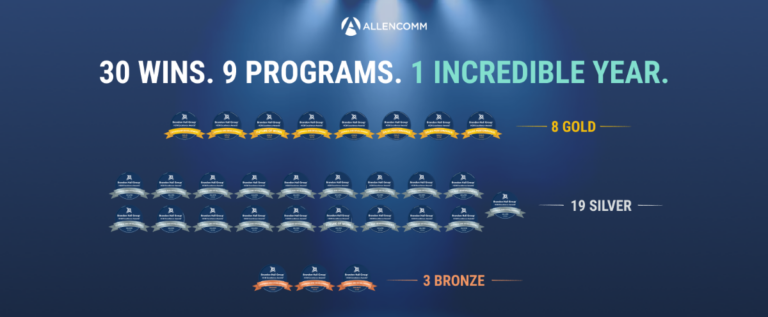
With over 40 years of experience, AllenComm is recognized as a top firm in the U.S., winning over 40 awards annually for its innovative, measurable, and impactful learning solutions. (source)